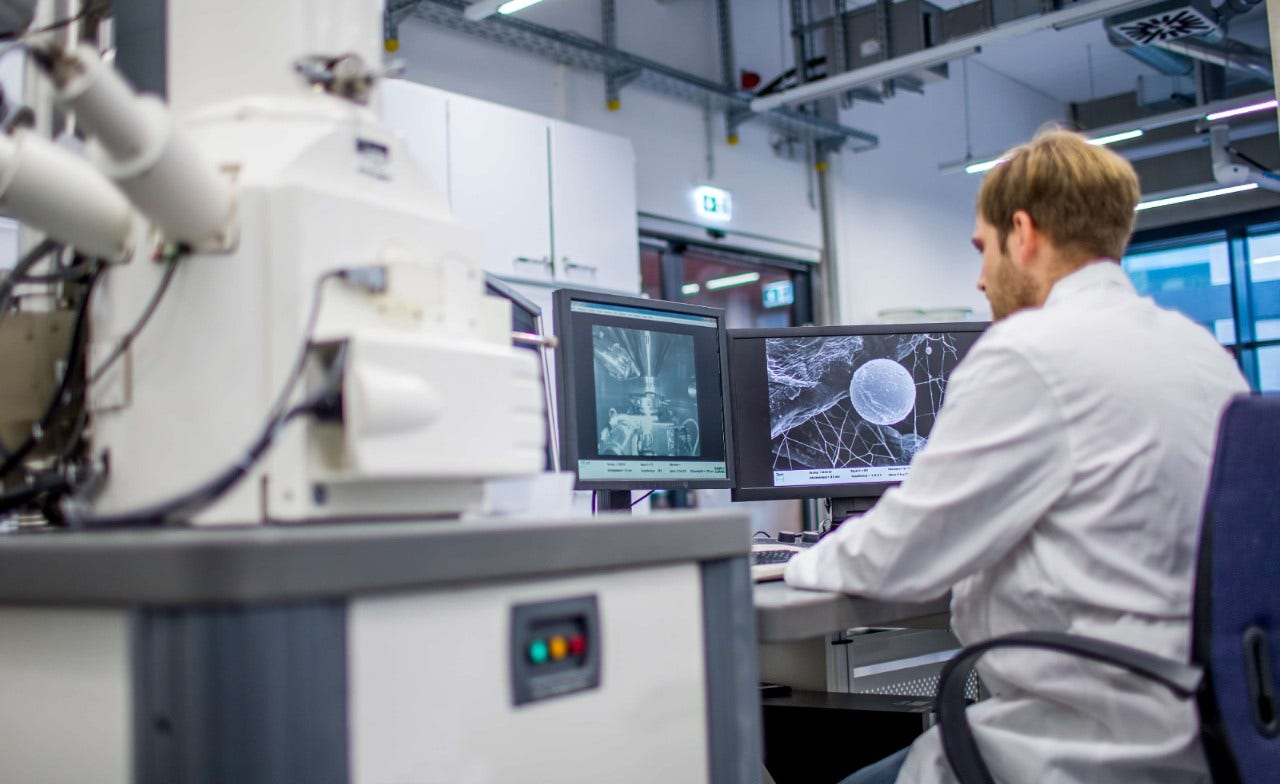
smartFE and smartFM: The science of filtration for smarter filtration development
Filter development used to be a grind: test a medium, evaluate a design, build a prototype, adjust, repeat. That approach is hitting a wall. Not because the expertise isn't there, but because the demands on modern filtration development have become more complex, more varied, and more contradictory than ever. Customers now expect higher filtration efficiency and excellent dust holding capacity and reduced pressure drop and a smaller carbon footprint and longer service life – all while cutting development timelines. Physical prototyping and conventional testing alone can't keep up with those demands, let alone scale efficiently.
That's exactly the problem smartFE (Filter Element) and smartFM (Filtration Material) are built to solve. Through an innovative, integrated approach that brings together materials science, digital engineering, and deep filtration expertise, we're connecting capabilities that once lived in separate disciplines and disconnected development stages. We are making them available across the entire development chain for truly agile product development, from fiber structure to filter medium to finished filter element. At FILTECH 2026, the world's leading filtration event, we presented this approach in full: the Science of Filtration as our answer to the growing complexity of filtration challenges.

Why modern filter development needs a new methodology
Modern filter development generates massive amounts of data: test bench results, field test data, simulation values, material characteristics, production data. For development engineers, the central challenge has long been not just collecting this data, but translating it quickly, reliably, and purposefully into decisions – and then turning those decisions into market-ready products. In industrial filtration especially, those demands keep growing, driven by tighter environmental regulations, increasingly complex applications, and relentless pressure to shorten development cycles.

What makes this harder is that filtration requirements often pull in opposite directions. Higher separation efficiency can increase pressure drop and raise energy consumption. Longer service life may mean higher material costs. A thinner filter medium is lighter, but potentially less durable. Finding the right balance across all these parameters – consistently, quickly, and reproducibly – is the real engineering challenge in filter technology. It's the balancing act at the heart of the filtration triangle.
Digitalization, simulation, and artificial intelligence offer a genuine opportunity to change how that challenge is met. The goal isn't to replace engineering expertise, it’s to build more powerful tools. Digital development methods shift key activities earlier in the process, allow physical prototypes to be used more strategically, and measurably compress iteration cycles. We recognized that opportunity early and with smartFE and smartFM, we've turned it into concrete tools for a smarter, future-ready development methodology, covering both individual filter elements and filter media.
smartFE: Better decision through structured data
The core idea was straightforward: take MANN+HUMMEL's comprehensive filtration knowledge – accumulated over more than 85 years of test results, field data, and simulations – and make it available to development engineers through an intelligent, self-learning tool.
The result? smartFE. It’s an internally developed software application for AI-supported filter element development that combines the scale of big data with the quality of structured, practice-relevant insights. All relevant information is centralized, processed through data pipelines, and analyzed using machine learning: test results, field data, and simulation data work together to build reliable predictive models. The systematic optimization of filter elements across all performance parameters becomes reproducible – and dramatically more efficient.

In practice, this might look like this: An employee enters the available installation space and performance requirements into smartFE. The software then generates a comprehensive set of potential filter element designs, derived from the full MANN+HUMMEL filter media portfolio and matched to the given specifications. In the background, smartFE processes all relevant performance data: filtration efficiency, pressure drop, service life estimates – clearly visualized and exportable for further development and customer communication.
The result is faster, more reliable design decisions, and a significantly higher level of standardization across all MANN+HUMMEL locations worldwide. Put simply, smartFE makes the company's expert knowledge accessible through a collaborative, web-based tool, available globally. AI handles the automation while engineers can focus on interpretation, evaluation, and final decision-making.
From digital twin technology to smartFM: The filter materials of the future
smartFE proved that a consistent, disciplined use of data, simulation, and machine learning can fundamentally accelerate filter element development. The logical next step was to push that same approach deeper into the development chain, down to the level of the filter medium itself.
That’s simply because before a filter element is built, the filter medium has to be developed. Fiber structure, layer configuration, pore size distribution, mechanical properties, processability – these characteristics determine what a finished filter element will ultimately be capable of. Getting these decisions right is what creates the foundation for superior filtration solutions and better products.
With smartFM, MANN+HUMMEL extends the smartFE principle to the media level. Digital twin technology makes it possible not just to characterize filter media structures, but to simulate their behavior under real-world conditions – from particle separation to loading behavior to pressure drop evolution over the full service life. Quality data from production and measurements from media characterization feed into these digital models and continuously enrich them.

The goal: a seamless digital development chain from fiber to finished filter element. With smartFE at the element level and smartFM at the media level, a connected ecosystem emerges – one that links material development and element optimization within a shared data environment for the first time.
Nanofiber media: Digital filter development in action

Nanofiber-coated filter media are a compelling example of how digital filtration engineering and materials science work in concert. In demanding application areas like commercial HVAC or industrial air filtration, conventional filter media technologies are increasingly stretched thin. Meeting high separation efficiency, low pressure drop, and long service life simultaneously puts enormous demands on media architecture and fiber structure.
Nanofiber coatings make it possible to capture very fine particles with high efficiency – without a proportional increase in pressure drop. The ultra-thin fiber layer changes the surface structure of the base medium, improving the ratio between separation performance and energy consumption. In energy-intensive air handling applications, that tradeoff matters a great deal.
For the development of these media, the smartFM approach opens up new possibilities: digital models of media structures allow different fiber parameters and layer configurations to be evaluated virtually before any physical samples are produced. Ideas can be validated earlier, resources deployed more precisely, and development timelines compressed – from initial concept to market-ready, innovative filtration solutions.

From materials science to filtration solution: An end-to-end development
What sets our approach apart from isolated digitalization initiatives is the deliberate, systematic connection of every development stage within an integrated ecosystem. Materials development, digital simulation, AI-assisted design, and manufacturing-informed product knowledge aren't separate disciplines. They're interlocking capabilities, unified by shared data infrastructure and shared engineering expertise.
This makes it possible to bring filter innovations to market faster, but more importantly, it means filtration solutions are optimized from day one for manufacturability, cost efficiency, and real-world application requirements. A filter medium that has been digitally developed and parametrically characterized delivers immediately actionable inputs for element optimization in smartFE. Conversely, insights from element design can feed back upstream and sharpen the requirements driving new media development.

For our customers and partners, this means: we're not just a supplier delivering a product. We're a filtration partner who can actively shape the entire product development process. From first media design through simulation validation and digital element prototyping to a manufacturing-ready solution that reproducibly meets every required performance parameter. MANN+HUMMEL brings together materials expertise, digital tools, and decades of filtration development knowledge within a unified methodology – making the Science of Filtration the cornerstone of our leadership in filtration.
Contact our experts to learn how our end-to-end filtration development can address your specific requirements.